Many steering complaints start with a simple thought: something feels off. The wheel might feel lighter than usual, the car may drift in its lane, or you find yourself making constant little corrections on the highway. It’s tempting to blame alignment right away, but suspension wear is often part of the story.
Steering and suspension are tied together, so when one side gets loose or worn, the other side feels it.
How Suspension And Steering Work Together
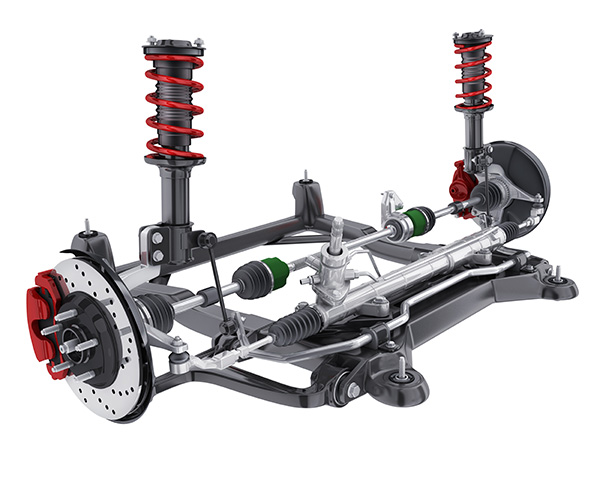
Your steering wheel isn’t directly “steering the tires” on its own. It’s sending input through steering components that rely on suspension parts to hold everything steady. If bushings, ball joints, tie rods, or strut mounts have play, the front wheels can shift slightly under load, even when you’re holding the wheel steady.
That shifting can show up as wandering, pulling, or a steering wheel that never feels settled. It can also make the car feel nervous over bumps, because the tires aren’t staying planted the way they should. When we see steering complaints that come and go, worn suspension parts are often the reason it feels inconsistent.
Early Signs Drivers Notice First
Most people notice steering changes before they notice suspension wear. The steering wheel becomes the “messenger,” even when the real problem is lower in the front end.
Here are common early signs drivers describe:
- The car drifts and needs frequent small corrections
- The steering wheel doesn’t return to center smoothly after a turn
- You feel a clunk when turning into a driveway or over a bump
- The wheel feels slightly loose or vague around center
- The car feels less stable during braking or lane changes
None of these automatically means something is dangerous today, but they do suggest the front end is not as tight as it should be. Small looseness tends to grow, especially with rough roads and everyday commuting.
Symptom Timeline: From Small Drift To Bigger Steering Complaints
It usually starts with a mild drift or a steering wheel that feels a little off-center. You might notice it most on the highway, especially when the road is crowned or windy. At that stage, the car may still feel fine, but it just takes more attention to keep it tracking straight.
Next, you may feel more feedback through the steering wheel. That can be a light shake over bumps, a little wobble during braking, or a steering response that feels delayed. If the wear continues, tire wear often joins the party. Once tires start wearing unevenly, the handling can get worse quickly because the tire itself becomes part of the vibration and instability.
What Actually Causes The Loose Feeling
A few parts do most of the heavy lifting when it comes to keeping steering tight and predictable. When they wear, the symptoms can overlap, which is why it helps to know the usual patterns.
Control arm bushings are a big one. They’re meant to flex slightly, but not shift around. When they wear, the wheel can move backward or sideways under braking and acceleration, which can feel like the steering is wandering.
Ball joints and tie rods are also common culprits. Ball joints allow controlled movement while supporting the vehicle’s weight. Tie rods transfer steering input to the wheels. If either develops play, the wheel can change direction slightly without you asking it to, and that’s when the steering starts feeling loose.
Struts, shocks, and their mounts matter too. A worn strut may not control bounce well, and a worn mount can create clunks and odd steering feel when turning. We’ve seen plenty of cases where the steering complaint wasn’t the steering rack at all, it was the parts holding the front end steady.
Test-Drive Cues That Help Narrow The Cause
When describing the issue, pay attention to when it occurs. Steering problems that are worse during braking often point toward bushings, loose joints, or brake related vibration. Problems that are worse over bumps can point toward struts, mounts, or loose steering components.
Also note whether it changes with speed. A vibration that builds with speed and continues even when you’re not braking can be tire balance, tire wear, or a wheel issue. A shake that mostly happens while braking leans more toward the brakes or the front end movement under braking load.
One more useful clue is steering wheel play. If you can move the steering wheel slightly left and right with little response from the tires, that can suggest looseness in the steering linkage. If the steering feels tight but the car still drifts, alignment or tire issues may be more likely.
Owner Mistakes That Make Steering Issues Worse
The most common mistake is doing alignment after alignment without checking for worn parts. If something is loose, the alignment won’t hold the way it should, and you end up paying for the same service repeatedly. Another mistake is replacing only the most obvious part without checking the rest of the front end. Worn parts tend to travel in groups, and a new tie rod won’t feel great if the control arm bushings are letting the wheel shift around.
Putting off tire wear is another one. Once tires develop uneven wear, they often stay noisy and can keep the car feeling unstable even after repairs. If you catch the issue early, you’re more likely to save the tires and keep the fix simpler. We tell drivers this a lot because we’ve seen how fast uneven wear can snowball once it starts.
Get Steering And Suspension Service in Silver Spring, MD with Allen Automotive
If your steering feels loose, the car drifts, or you’re hearing clunks over bumps, it’s worth having the front end checked before tire wear and handling get worse. We’ll inspect steering and suspension components, pinpoint what’s worn, and explain the next steps clearly so you’re not guessing.
Get steering and suspension service in Silver Spring, MD, with Allen Automotive, and we’ll help you get back to a stable, confident feel behind the wheel.